
Wise Bookkeeper Blog
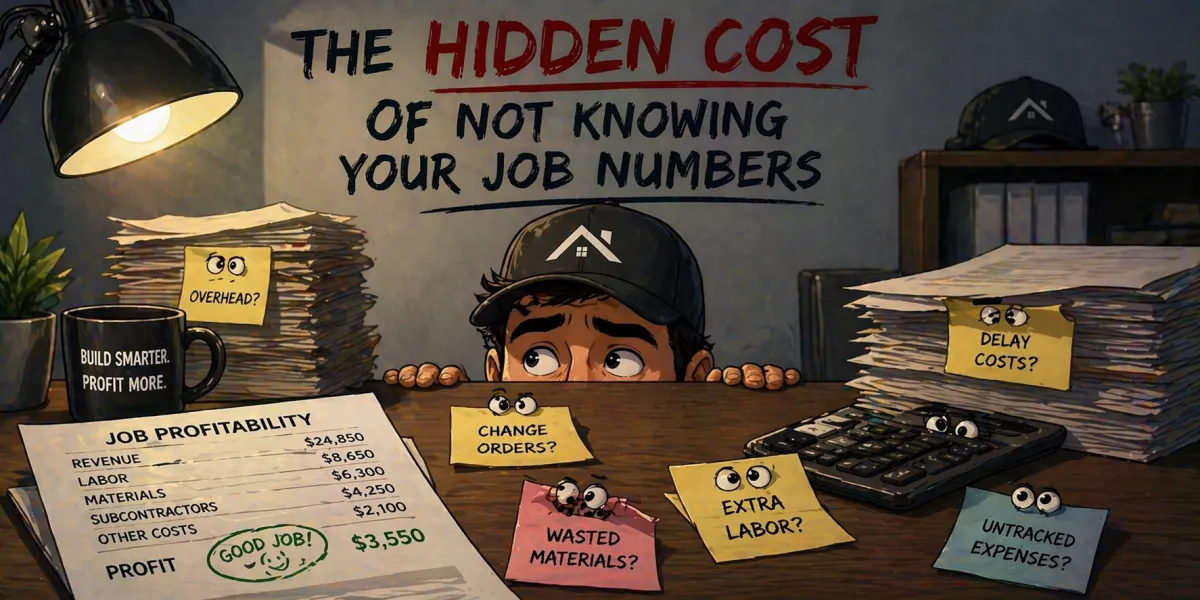
The Hidden Cost of Not Knowing Your Job Numbers
The Hidden Cost of Not Knowing Your Job Numbers
Most roofing business owners don’t think they have a profitability problem.
They’re busy.
Jobs are getting done.
Revenue looks solid.
But at the end of the month, or worse, the end of the season, something doesn’t add up.
Margins are thinner than expected.
Cash is tighter than it should be.
And there’s no clear answer why.
That’s the hidden cost of not knowing your job numbers.
Because when you’re not tracking job-level profitability, small leaks turn into big losses.
What Are “Job Numbers,” Really?
Your job numbers tell you one simple thing:
👉 Did this job actually make money?
At a basic level, that means tracking:
Estimated cost vs. actual cost
Labor hours vs. planned hours
Material usage vs. estimate
Gross profit per job
Without this visibility, every job feels successful…
But you’re guessing.
Why This Problem Goes Unnoticed
This isn’t a loud problem, it’s a quiet one.
There’s no single moment where things break.
Instead, it shows up over time:
Margins slowly shrink
Cash feels tighter
Growth doesn’t translate into profit
And because you’re busy, it’s easy to assume:
“Costs must just be higher this year.”
“We’ll make it up on volume.”
👉 But volume without visibility usually makes things worse, not better.
Where the Money Actually Leaks
Let’s break down the most common places profit disappears when job numbers aren’t tracked.
1. Underestimated Labor
Labor is one of the highest and most unpredictable costs in roofing.
Without tracking:
Jobs run longer than expected
Crews work inefficiently
Overtime creeps in unnoticed
Individually, it doesn’t seem like much.
But across dozens of jobs?
It’s thousands of dollars lost.
👉 If you’re not measuring labor, you’re guessing, and guesses are expensive.
2. Material Overruns
When materials aren’t tracked against estimates, it’s easy to lose control.
Extra bundles ordered “just in case”
Waste from poor planning
Price increases not reflected in estimates
Again, small on one job, significant across many.
👉 Material creep is one of the easiest ways to lose margin quietly.
3. Missed or Unbilled Work
Crews encounter unexpected issues all the time:
Decking repairs
Additional layers
Structural fixes
If those changes aren’t documented and billed:
You’re doing extra work for free.
👉 Without job tracking, these losses are invisible.
4. Pricing That Never Gets Corrected
If you don’t know which jobs are underperforming, you can’t fix your pricing.
So what happens?
You keep bidding similar jobs the same way
The same mistakes repeat
Losses compound over time
👉 Bad pricing isn’t always obvious; it’s often just unmeasured.
5. “Profitable” Jobs That Aren’t Actually Profitable
This is the most dangerous one.
A job looks fine because:
The invoice amount is solid
Nothing went obviously wrong
But when you factor in:
Extra labor
Material overruns
Missed changes
…it may have barely broken even, or worse.
👉 What you don’t track, you assume is working.
The Real Cost: Compounding Losses
Here’s why this matters so much:
Let’s say you lose just $500 of margin per job.
That doesn’t feel catastrophic.
But across 50 jobs?
That’s $25,000 gone.
And most owners never see it happening.
👉 Small leaks don’t stay small; they multiply.
How to Start Fixing It
You don’t need a complicated system.
You need consistent visibility.
1. Compare Estimated vs. Actual on Every Job
At minimum, track:
Labor hours
Material costs
Total job cost
Then compare it to your estimate.
👉 This is where clarity starts.
2. Identify Patterns (Not Just One-Offs)
Don’t focus on one bad job; look for trends:
Are certain job types always underperforming?
Is labor consistently higher than expected?
Are materials frequently going over budget?
👉 Patterns tell you what to fix.
3. Adjust Pricing Based on Reality
Once you see where you’re losing money:
Increase pricing where needed
Add buffers for known risks
Stop underbidding problem jobs
👉 Your pricing should reflect real-world performance, not assumptions.
4. Create a Feedback Loop Between Field and Office
Your numbers only improve if your team is aligned.
Sales needs accurate estimating
Production needs to track performance
Leadership needs visibility
👉 Profitability is a team effort.
5. Review Job Performance Regularly
Don’t wait until the end of the year.
Review job performance monthly (or even weekly in busy season)
Use it to guide decisions in real time
👉 The faster you see the problem, the faster you fix it.
The Shift That Changes Everything
When you start tracking job numbers, something powerful happens:
You stop relying on gut feeling and start operating with clarity.
You know which jobs are worth doing
You fix issues before they compound
You price with confidence
You protect your margins
Final Thought
Most roofing companies don’t lose money because of one big mistake.
They lose it through dozens of small ones they never see.
That’s the hidden cost of not knowing your job numbers.
Because visibility isn’t just helpful, it’s essential.
Want Help Getting This Dialed In?
At Wise Bookkeeper, we help roofing companies track what actually matters, so you can see where your profit is being made (or lost).
From job costing to clear financial reporting, we give you the visibility you need to grow profitably.
Let’s turn your numbers into clarity and your work into real profit.

© 2024 Very Good Business Services
Contact
kendra@wisebookkeeper.com
888-705-9609